Hollersteboller! That’s how the year slips out from under your feet. Well, before you rub your eyes and December’s hourglass runs out too, here are a few highlights from October and November’s activities from our part of the globe .
The one highlight we would like to highlight is a conference called CPI Renown that we were able to attend as a family in Shizuoka last week. It was particularly encouraging and reminded us that our “labor in the Lord is not in vain.” (1 Corinthians 15:58).
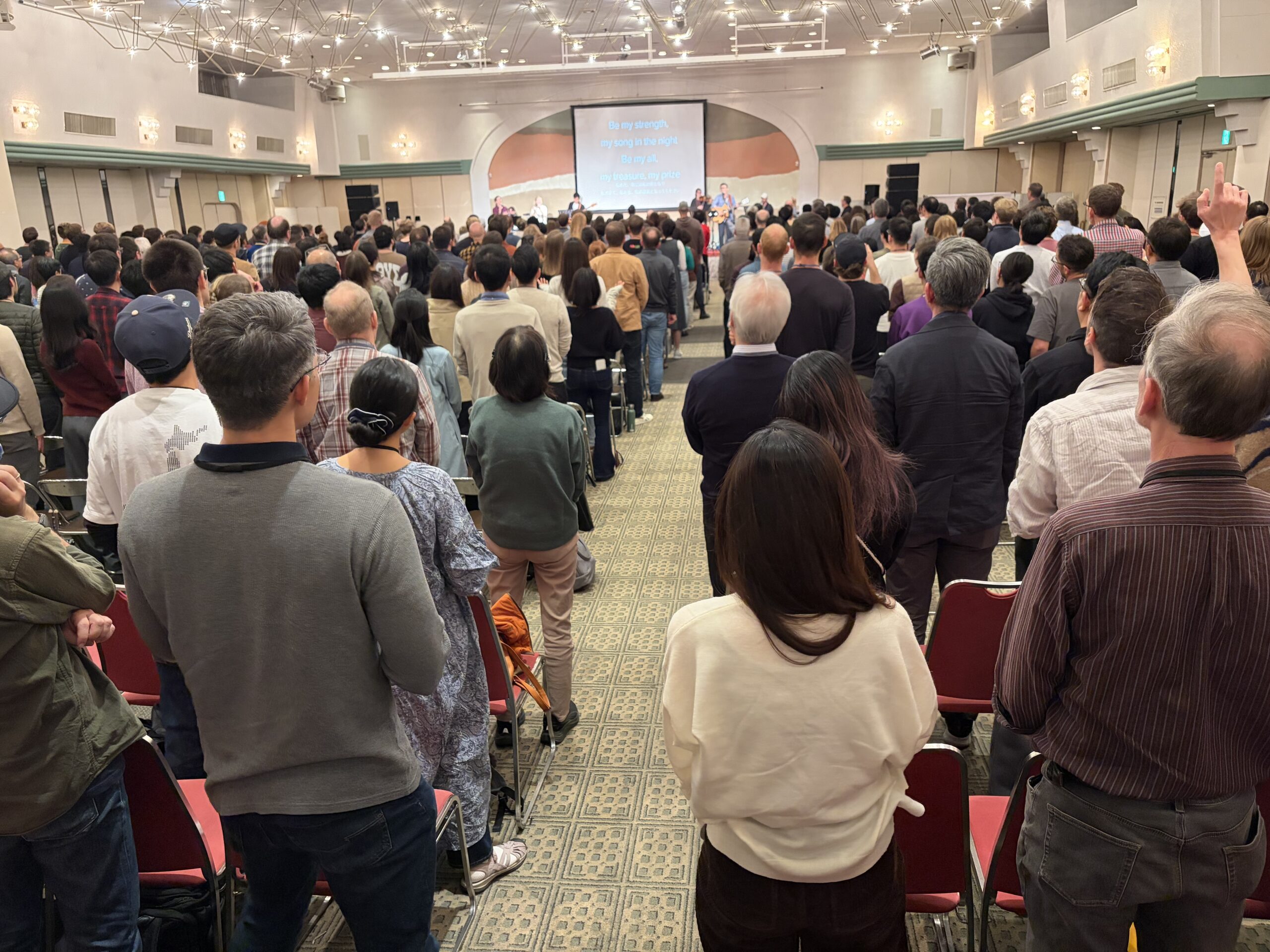
What do sound theology, enthusiastic praise and broken, bruised feet have to do with each other? At the conference, where more than 800 people gathered, we were reminded anew of the inseparable connection between sound doctrine and fervent missionary zeal. But how do we remain faithful to the Lord’s calling in a country where harmony often outweighs truth, and the fruit of missionary work is so little visible? Read on (at the very bottom) as Carina shares her impressions of the conference in color and flavor. And watch this short video that summarizes our experience.
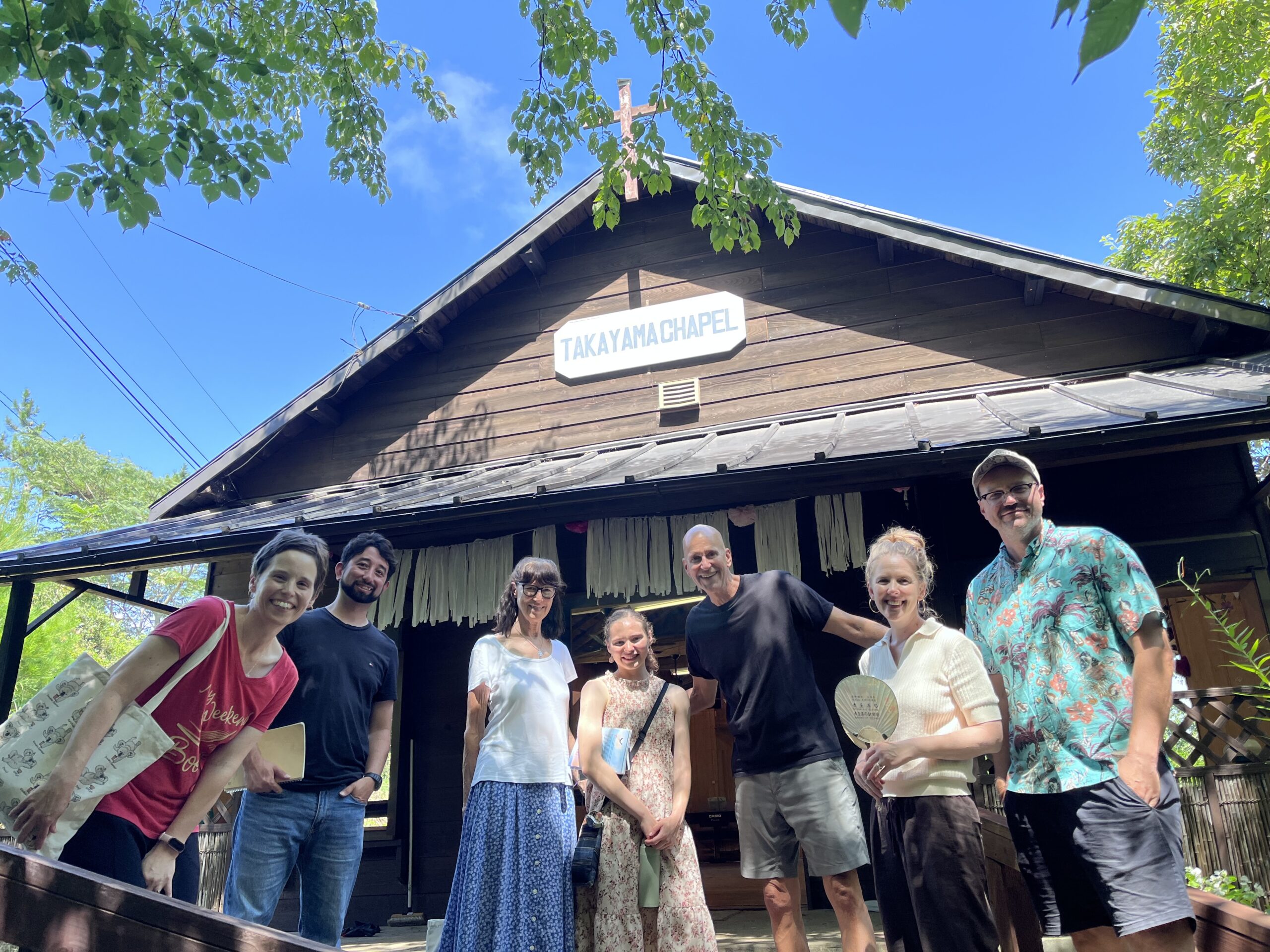
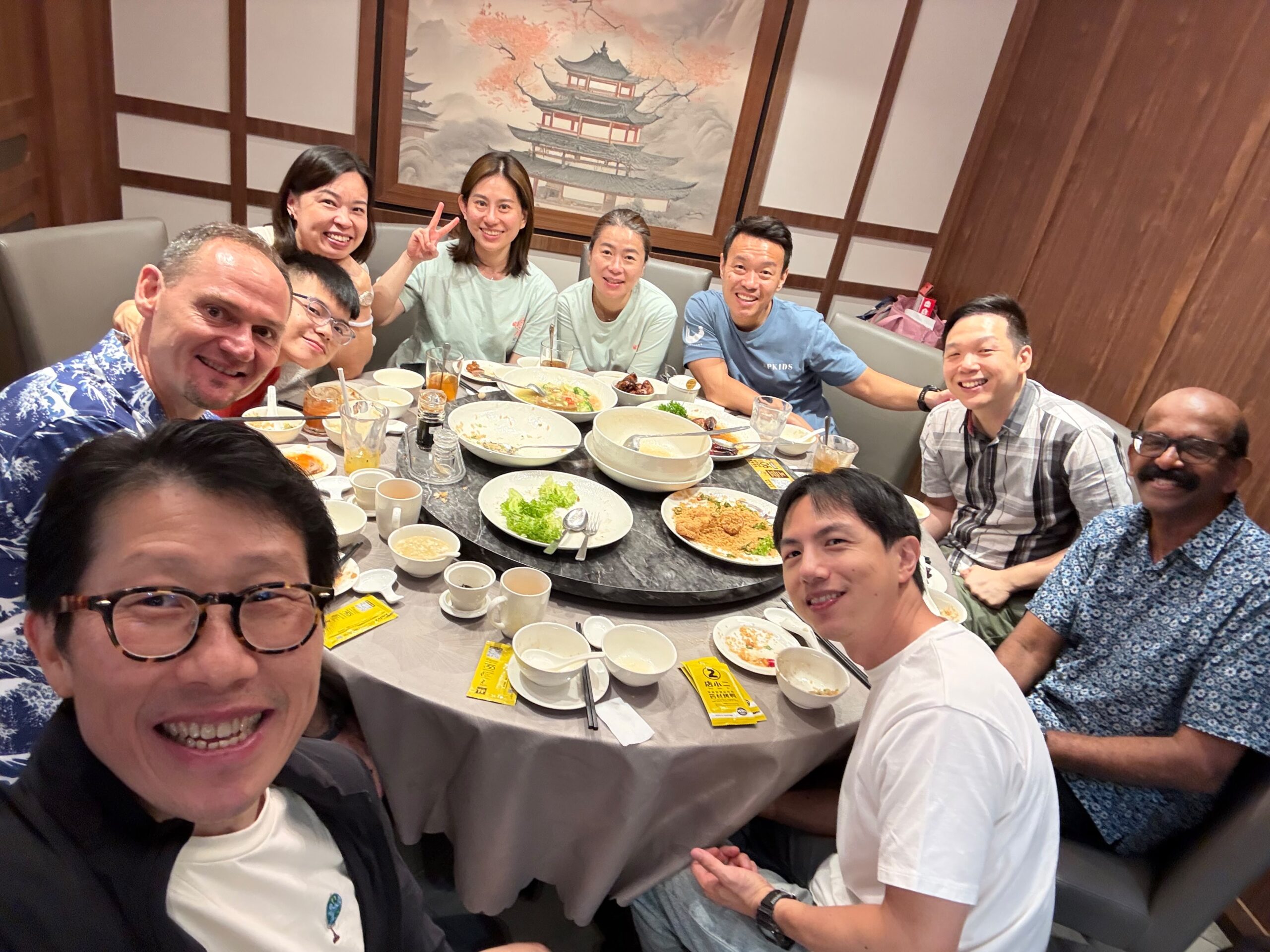
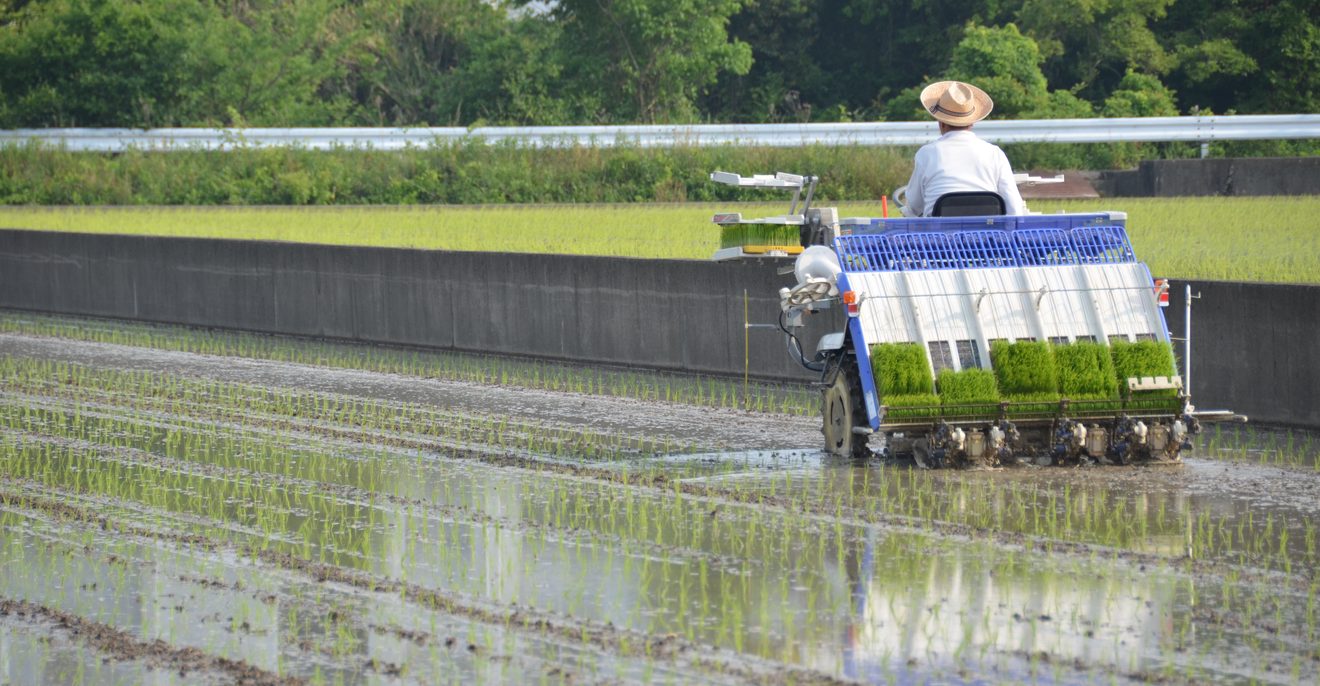
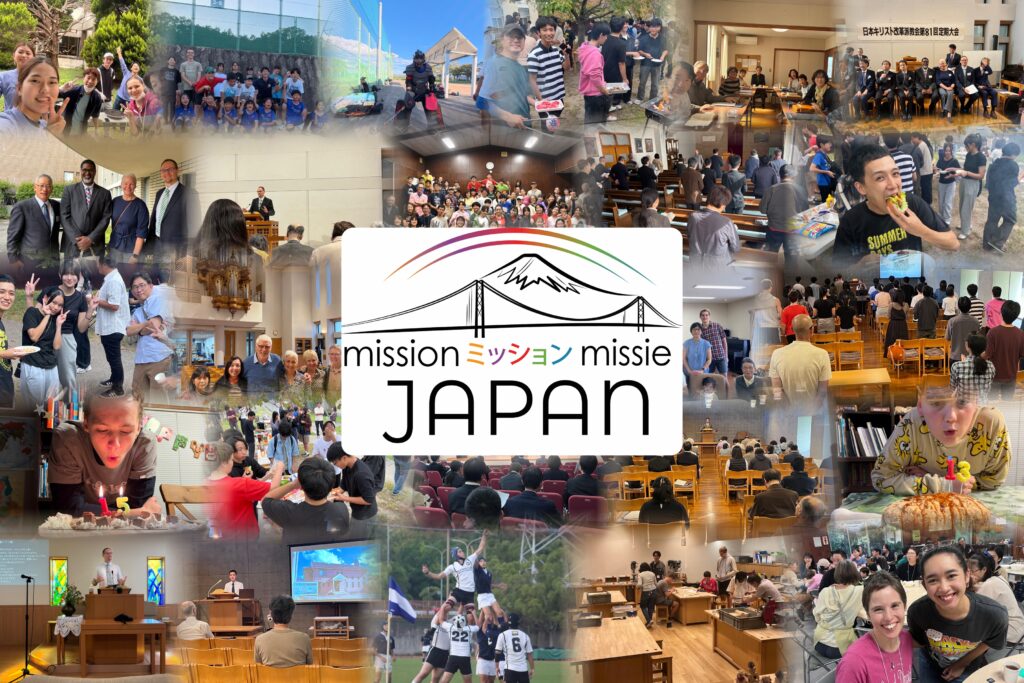
Now, the promised highlights from our recent ministries. The mosaic of photos ( collage ) will give you a first impression and the summary below clarifies it in a nutshell.
For about 50 teenagers from our area, our annual autumn barbecue was much more than just a fun social event. Bridges were built between the church and young people from our community. It opened doors for new encounters with the Christian faith in Japan, with a mere 1% Christian population.
I (Stéphan) was part of a recording and broadcast of Bible messages on a local Christian radio station . It was a unique opportunity to share the Good News with a very large, ‘invisible’ audience in Japan.
The Reformed Church in Japan , under whose care and supervision we work, held its synod meeting at the end of October. The 140 congregations spread across Japan found new courage and strength through the gathering of leaders, and the coming together of a renewed vision to be faithful witnesses here. I conveyed a message of greetings on behalf of the Dutch Reformed Church at the meeting, and also met with other ecumenical church leaders from the Netherlands, America and Korea.
Our RCJ Diaconal Action Team met to evaluate and implement our involvement in the Kumamoto disaster area, as well as our support in Nepal and in various projects in South Africa.
Our fellow missionaries, Tobie (res.) and Annalie de Wet, have faithfully built on their ministries in RCJ Tokushima-West congregation, including the pastoral care of members, Bible studies, and equipping the congregation with its vision and passion for and outreach to those in their work, family, and friend circles.
We as the Van der Watt family attended a meaningful gathering for families participating in homeschooling in the greater Kansai area, with almost 100 people gathered.
I preached in five different congregations and on another occasion equipped a congregation with a lecture on mutual pastoral care.
Furthermore, I presented an online lecture to people from various churches, about David Bosch, South African theologian and missionary, and the ongoing global impact and significance of his work, especially through his book Transforming Mission , also in Japan.
Our seminary ( Kobe Reformed Theological Seminary ) was also part of two academic symposia in November. One was with a Lutheran seminary (in Kobe), on the interpretation of the Gospel of John. The other gathering, in Osaka, was with several churches from Evangelical circles, on the question “Who is the Evangelical Church in Japan today?” Stimulating, meaningful discussions on current issues of our day.
Finally, we were encouraged by a short visit from four South Africans from the Western Cape (Hendrik (rev.) and Jurita Saayman from Kleinmond, and Andries and Tina Erwee from Grabouw). It was a nice visit, short, but powerful!
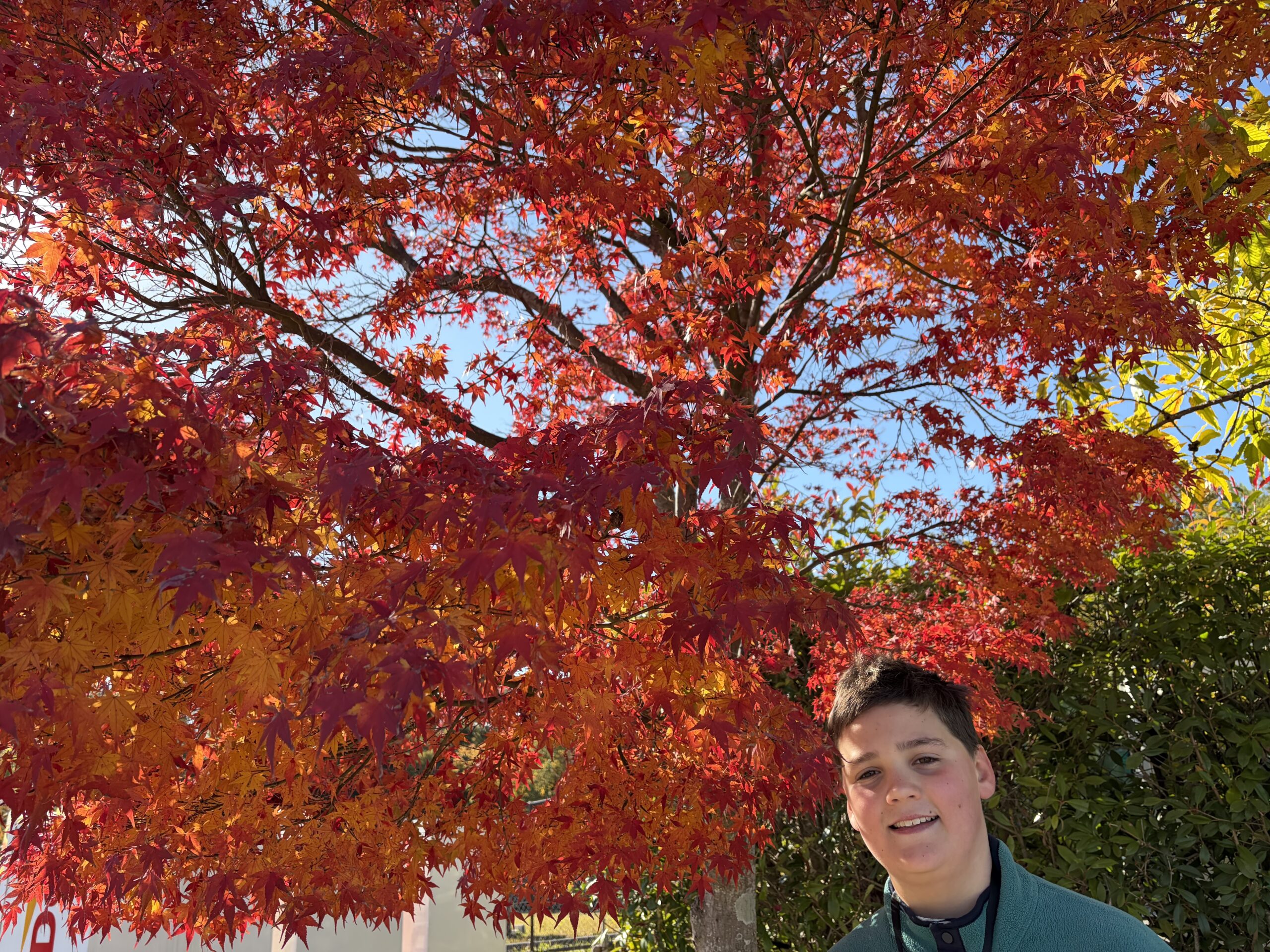
On a different note, we celebrated two birthdays in November, of Lodewyk (15) and Stephan (13). The young men are growing at a pace! Cornelius (17), through great grace and focused dedication, did well in his crucial exam, which counts for university admission. Thank you to everyone who is praying together for more clarity on his university options for 2027, in the Tokyo area, DV.
It remains our prayer that more people in Japan, and beyond, will discover the unique, rock-solid Christian hope in their daily lives. Thank you for your compassion, support and prayer, especially for our many ministries during Advent and Christmas in Japan . It is indispensable for us, as your sent co-workers, here.
Peace, blessings and strength in 2026!
Stéphan, Carina and family
Mosaic of activities
The need for both doctrine and devotion
A reflection after attending the CPI Renown Conference,
18-20 November 2026
by Carina van der Watt
Doctrine and theology on the one hand. Passionate praise and worship on the other. Incompatible, right? Dry doctrine and heartfelt devotion seem to be as inconsistent with each other as reclining on a couch and eating chocolates while reading about dieting and exercising.
But this is not my own experience as a missionary in Japan. Neither is it what Paul, the great missionary, advises. Nor is it what South African missiologist David Bosch, whose work is translated even into Japanese, taught: “No mission is possible without theology; no theology is possible without mission. We need the foundation of theology to do missions; theology without mission, on the other hand, will become a dead theology.” (David J. Bosch’s Witness to the World: The Christian Mission in Theological Perspective)
Last week we attended CPI Renown, a conference organised by the Church Planting Institute of JEMA. More than 800 people—most missionaries, and many servant helpers from America—attended. When we sung about God who is sovereignly ruling from high while all the tribes and nations bow down before him, you could imagine the emotional barometer of the room. Gathered together were missionaries from all over the world working all over Japan to tell people that there is no other way but the cross of Jesus—a thoroughly scandalous proposition for our day and age. To be a missionary in a post-modern age of relativism in which inclusivity is the virtue of the day, means that the missionary himself needs to be fully devoted to God. (Unfortunately, drained and disappointed, we sometimes cop-out, becoming lukewarm missionaries, warming ourselves in the hot water baths of Japan.)
Here, at the conference though, the zeal and the fervour for Christ, was tangible. But zeal and fervour can easily become dangerous, sometimes even cultish. Zeal and fervour alone are not always enough in Japan. This is what made this conference particularly encouraging and even providential for me. It was built on sound theology, on sound doctrine. The conference’s messages and seminars were filled with experience, research, and thorough and proper Biblical exegesis with a strong emphasis on the importance of the existing church here in Japan. Again David Bosch is relevant: “A church without mission or a mission without the church are both contradictions. Such things do exist, but only as pseudostructures.” (Bosch, David J. (1991). Transforming Mission: Paradigm Shifts in Theology of Mission.)
Paul repeatedly warned that we should protect the sound doctrine with utmost care; that we should look out for those who distort teaching. Why would Paul, a missionary, whose one goal was to spread the gospel, worry about doctrine?
Many evangelical Christians are wary of dry doctrine. They have seen enough of doctrine divorced of Christ and his resurrection, doctrine without the supernatural and the miraculous. Christian values yes, but without the Messiah. Doctrine without the Messiah leads to a comfortable religion which never challenges us. Ironically, it also leads to false beliefs that fit more with the culture around us. Zeal without doctrine, ironically, equally could lead to false beliefs or to quitting the mission field.
True doctrine then, should lead to praise, to greater devotion. Theology should overwhelm us with who God is and what he has done for us. It should pull us out of our modern individualism and help us realise that everything starts from God, not from us. It does not begin with our desires or ambitions, even if they are good desires and praiseworthy ambitions. Doctrine should change us so that we will heed the call of Jesus Christ when he says, Take up the cross and follow me.
Take the doctrine of salvation. When we contemplate the doctrine of salvation, not only believe it, but really contemplate it, we realise that all fear is gone. If we have accepted Jesus as our Lord and saviour, we have full assurance of God’s salvation. When we meditate even longer, we are shocked into action. Because the doctrine of salvation clearly states that Jesus is the way. Not a way, but THE way. If you are consistent in your Biblical doctrine, the only conclusion you can make is a disturbing call to action: How can each and every Christian not be involved in mission-minded minstries? After all, if Jesus is THE way, how will they believe if they have not heard. Do you see how logical reasoning connects doctrine with zeal?
Why then, with all this devotion and zeal, based on sound doctrine as was evident at the Renown conference, are there so few Christians in Japan? Isn’t the Word of God powerful, revealing the truth like a double-edged sword? A Korean missionary, who has planted a Church in Tokyo, explains. In Japan harmony, or 和 (WA), is the ultimate virtue. In the west, traditionally, people were willing to die for the truth. In Japan, people would die for harmony.
After doing extensive Bible study with one particular Japanese women, she becomes convinced of the truth of Christianity. However, she does not want to give her life to Jesus. Why on earth not? If you know the truth, would not you then follow the truth? No, said the lady. She does not want to disturb the harmony. She does not want to cause trouble to her family and friends around her. She is, in effect, willing to die for harmony.
If we only had zeal and passion at this moment many missionaries in Japan would have become desperately despondent. But this is where good solid theology help us understand that missions is not about outcomes. It is not about the amount of conversions.
The same Korean missionary reflected on Romans 10:15 in his message. “And how can anyone preach unless they are sent? As it is written: ‘How beautiful are the feet of those who bring good news!’” Beautiful feet, even though the wider passage remarks on how many of the Israelites did not respond to the gospel. Let us look at our own feet then. Nowadays people have the best cushioned trek boots to walk across mountains. But in those days you had sandals. Your feet were exposed. When you reached your destination they were covered with mud, bloodied, bruised. How can they be beautiful?
Well, think about a ballerina or a marathon runner. Do their feet look beautiful? No, if you are a serious sports player, if you devote your life to ballet or running, your feet become torn, calloused, and blue, with nails on some toes even non-existent. Yet, the Bible calls the feet of those who bring the gospel beautiful.
We look at our feet and they seem outright ugly to us. But God tells us they are beautiful. What an exhortation to start training and running and enduring! God has never worked according to the expectations of people. In the small and the weak and through insignificant work, God has revealed himself. He does not work with big numbers or with huge outcomes. That would be your stereotypical prosperity-gospel. The doctrine of the Bible is about a God who is sovereign, about a God who lets His Holy Spirit move where he determines, and about a God who changes hearts where He wills and when He wills.
We, you and I, who know the truth, are only called to be faithful. And to hold onto the promises of God: His word will not return empty.
So is my word that goes out from my mouth:
It will not return to me empty,
but will accomplish what I desire
and achieve the purpose for which I sent it.
Isaiah 55: 11